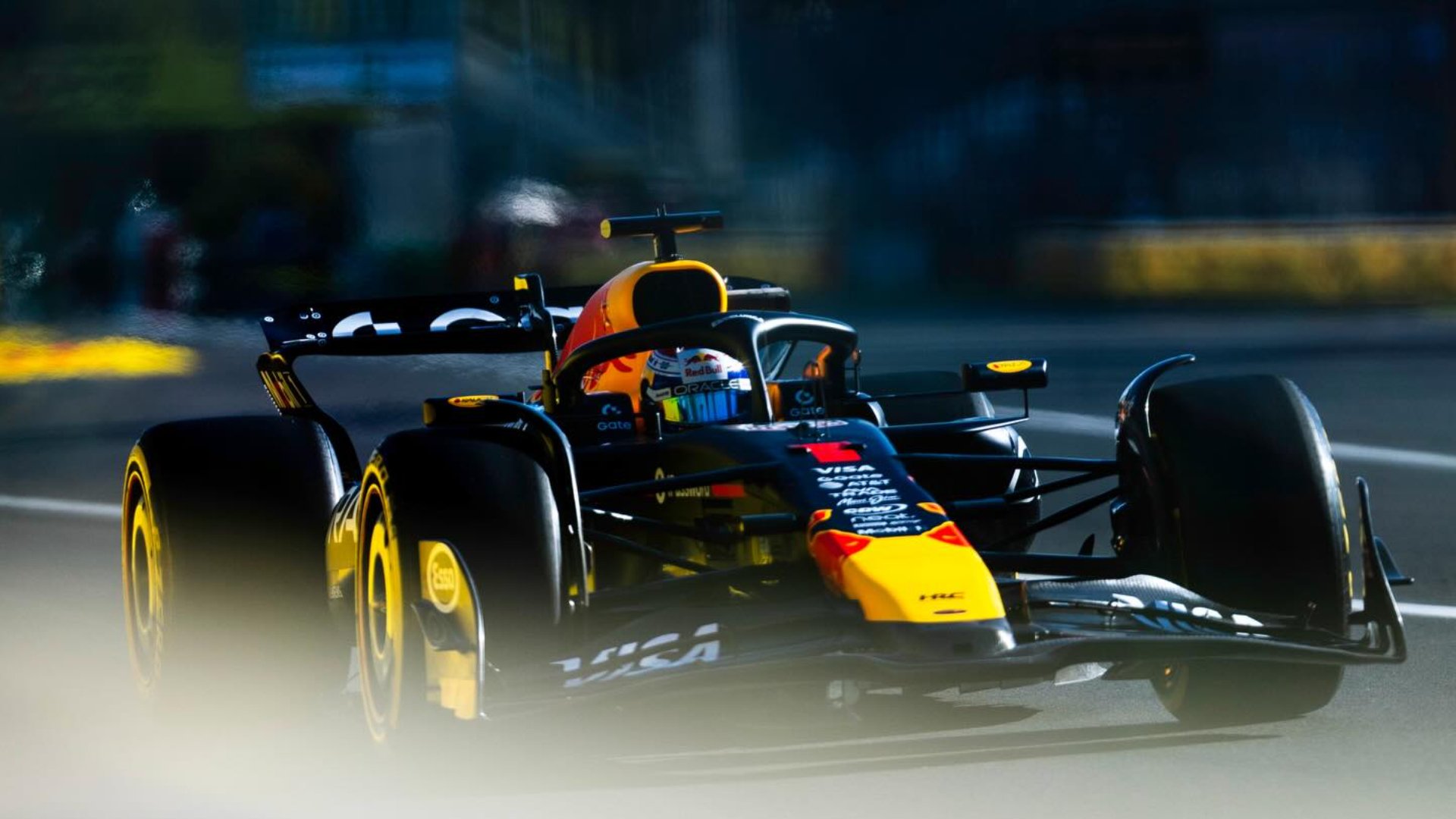
Photo: Red Bull Content Pool

Ford admits nerves as Red Bull’s 2026 F1 engine faces first big test in Barcelona



Red Bull will enter F1’s new power unit era with its own engine developed together with Ford, replacing its hugely successful partnership with Honda. Ford Performance boss Mark Rushbrook says the project is on track, but admits there is “some nervousness” ahead of the first real on-track test in Barcelona.
F1 & MotoGP news to your inbox every day.
Red Bull’s leap into the 2026 regulations is one of the most ambitious projects in modern Formula 1. At a time when the sport is undergoing its biggest power unit transformation since the hybrid era began in 2014, the reigning frontrunner is stepping away from Honda – the partnership that delivered four drivers’ titles and two constructors’ championships – to rely on its own in-house Red Bull Powertrains unit, supported by Ford.
From 2026, F1 engines will feature a far greater electrical contribution, with power output split almost 50:50 between the Internal Combustion Engine and the MGU-K. At the same time, sustainable fuels will be introduced, energy recovery will play a far bigger role, and overall efficiency will be more critical than ever. In short, it is not simply an evolution – it is a complete reset.
That is why Ford is fully aware of the scale of the challenge. Mercedes boss Toto Wolff famously described the Red Bull-Ford project as “climbing Mount Everest”, and Rushbrook does not entirely disagree.
“We are where we planned to be, but everything comes together only when the engine is in the car and running on track,” he said, as quoted by Autosport.
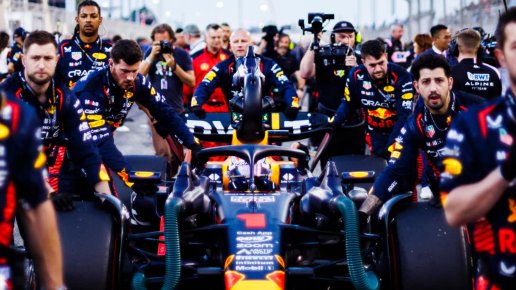
The first key milestone will come at winter testing in Barcelona, which will take place in January behind closed doors. Rushbrook admits there is “some level of nervousness”, regardless of how well things have gone in the factory.
“You can design and evaluate a lot with simulations, labs and dynos, but until it all runs together in a real car, on a real circuit, you simply haven’t seen everything yet,” he explained.
The development approach so far has been methodical. Ford and Red Bull Powertrains have been pushing performance, then stabilising reliability, before chasing more performance again. Recently, the focus has shifted towards drivability: how the power unit responds to the driver and how smooth and predictable the delivery is, which will be crucial given the increased hybrid deployment and sophisticated software control required for 2026.
“It’s about power, performance, reliability and then drivability,” Rushbrook said. “A lot of that can be developed in simulation, some in the lab, and some together with the drivers in the simulator. That’s where the focus is now.”
The biggest unanswered question remains whether Red Bull and Ford have set their internal targets high enough compared to established manufacturers like Ferrari, Mercedes and Honda.
Rushbrook insists that Red Bull’s targets have been met, but acknowledges that no one truly knows how far rivals have pushed their own boundaries.
“Everyone understands what is theoretically possible under the rules. After that, it’s all about how efficiently you can actually reach that level,” he explained